

Over the years, Barnsley’s approach to transfers has evolved into more of an analytical approach to the scouting of players.
Whilst that itself has in ways remained constant, the sources of Barnsley’s players has varied.
In this article, we dive into how the strategy itself has evolved over the years, looking at its early successes to the recent lull in League One.
The data-model, coined “The Spreadsheet” by Tykes fans, was introduced by James Cryne around July 2014.
This analytical approach has become central to the club’s transfer strategy, focusing on scouting undervalued young players using statistics, developing them, and selling them for a significant profit.
With those profits, the cycle repeats, with the club being able to afford better players at each stage.
Early successes under the new spreadsheet model were varied, but most notably midfielder Conor Hourihane and defender Alfie Mawson sold for a combined reported profit of £9,250,000.
These instances and player trading success attracted the interest of a consortium including American Paul Conway, Chien Lee, and baseball coach Billy Bean.
This consortium wanted to further this ‘data-model’ and expand it to find players in continental Europe too.
Beane especially had experience with a data-based approach to scouting, as the film ‘Moneyball’ outlined, he had major success with The Oakland A’s in creating success on a small budget.
As stated, the aim was to expand and adapt the ‘moneyball’ approach to continental Europe and even South Africa, creating a culture of winning and success on the way.
As most Barnsley fans already know, the years since then haven’t gone too well.
The following window from the takeover saw Barnsley sign three new faces. Aaron Leya Iseka, Christoph Knasmuller, and Marcel Ritzmaier.
These three players made a combined 52 appearances for The Reds, equating to just over £38,000 per appearance, scoring 3 goals.
Iseka was also reported to be the club’s top earner, the million pound Belgian was on an alleged £8,000 p/w, making 25 appearances in his 3 years at Barnsley; in effect he earnt just shy of £50,00 per appearance for the club.
Defensively, Barnsley saw a higher range of success, bringing in Danish center-back Mads Andersen – who went on to become club captain, and German Michael Sollubauer, both of which had immense positive impact during their respective stays at the club.
During this period of significant hardship, Barnsley fought.
At a time when fees collapsed and the market stood still, Barnsley doubled down on undervalued players with high physical output and strong pressing numbers, with long-term resale potential.
The club picked up overlooked assets in Michal Helik, Callum Styles, Cauley Woodrow, Jacob Brown, and most notably Daryl Dike on loan from the MLS.
With the appointment of a manager who has experienced the hard yards of European football, Valerian Ismael. Barnsley had a team that, though underdogs, could compete.
The Tykes finished 5th that season, the club’s best since the late 90s. This instance is often seen as the spreadsheet’s biggest success.
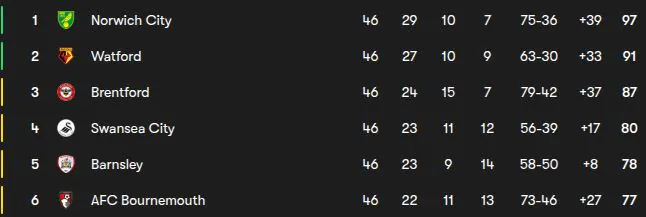
Since that miraculous play-off run, Barnsley’s transfer strategy has morphed into a limitation rather than a strength.
The club stuck with the model that promised to prioritise youth, resale valu, and numbers. The consequences were almost immediate.
Rather than following clubs like Brentford and Brighton, who used data-models themselves, to adatp to post-covid means, Barnsley refused to change.
The summer of 2021 saw Barnsley lose key names, captain Alex Mowatt left on a free, and Dike went back to Orlando.
Their replacements were much younger, and much much cheaper, and development wise, were not ready for intense, Championship football.
The attack lost its pressing presence, and the model failed to account for experience and tactical balance.
The managerial appointments followed in its poor pattern.
Unkown Markus Schopp was hired, and quickly struggled. He lost the dressing room just as quick, and was replaced by Swedish-Iranian Poya Asbaghi.
Asbaghi inherited a broken sqaud, and his style of play didn’t fit the Barnsley approach. He was discharged after 5 months at the helm – averaging 0.8 points per game.
Then came Michael Duff, the Englishmen brought lower league exeprience to a broken dressing room.
He brought in the likes of experienced forward James Norwood, wing-back Nicky Cadden, and future Reds skipper Luca Connell.
Overall, the squad was galvanised and fought week in and out, earning their spot in the play-off final, inevitably losing to rivals Sheffield Wednesday.
The constant manager comings-and-goings followed as Duff left for Swansea.
With him captain Mads Andersen left for Premier League outfit Luton Town, Norwood was ousted, Bobby Thomas‘ loan had ended, and Liam Kitching followed him out to Coventry City.
Herbie Kane ran out his contract the following season. The core of the squad was ratlled, but had funds. Which the board never truly invested.
Andersen was replaced by French center-half Mael De Gevigney, Kitching by Josh Earl, and Jamie McCart joined The Tykes on loan from Rotherham.
These cheap, rash replacements ultimatly led to a 6th place finish, with manager Neill Collins losing the player confidence, and assistant Martin Devaney guided the Reds to an unfortunate play-off semi-final defeat to the hands of Bolton Wanderers.
The following season Barnsley appointed Cheltenham gaffer Darrell Clarke, who with him saw the arrival of experienced Marc Roberts, young star Georgie Gent and the coup arrival of Davis Keillor-Dunn.
In January the club also signed winger Neil Farrugia from Shamrock Rovers.
The constant decline follows, Clarke was sacked in March 2025 before the seasons end. Hourihane replaced him as interim, then after rumours he would join MK Dons as Paul Warne‘s assistant, the board opted to make the appointment permenant.
The Reds finished in a measly 12th place.
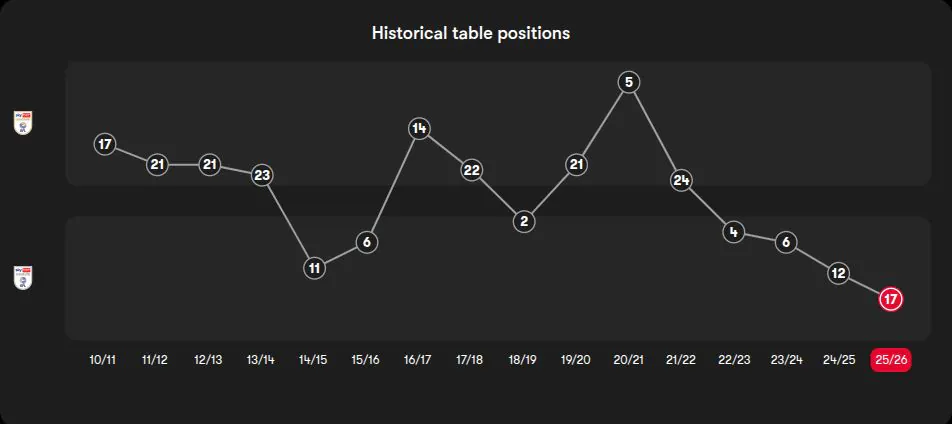
For Barnsley, the future depends on whether the club can learn from the past, rather than ignore it.
The data-model doesn’t need to dissapear, but adapt to circumstances. In Brentford and Brighton’s instances, it proves that ‘moneyball’ works, but clubs have to be able to stray when it needs to.
Football isn’t just a numbers game, a team has to blend and suit a managers tactics and needs.
In Hourihane, The Tykes have a gaffer who knows how he wants to play, direct, high-press, wing play foornall with a ‘fox-in-the-box’ to tap the chances away.
Stabilty is key for the club, not a manager ‘merry-go-round’ that brings a constant change in system.
Patrick Kelly, Reyes Cleary, and Jonanthan Bland are 3 instances in which the current data-model works.
Poaching hungry, young talent and developing them. Utilising them next to experience that elevates the game of the youth.
Harnessing that, Barnsley are set up for a positive future, they just have to back the manager Hourihane as much as possible.

